

Medical Billing Process Steps
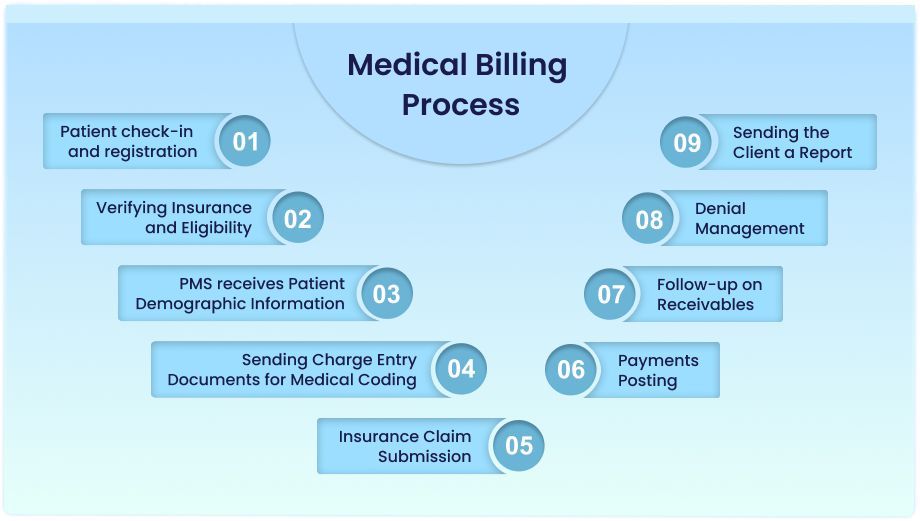
In today’s healthcare industry, accurate billing is essential for maintaining smooth financial operations and ensuring providers receive timely payments. The Medical billing process step by step involves a structured workflow that transforms patient services into insurance claims and final reimbursements. Every stage, from patient registration to payment posting, plays a vital role in reducing claim denials and improving revenue management. Medical billing is not simply about sending invoices; it is a comprehensive administrative process that requires attention to detail, proper documentation, and compliance with healthcare regulations.
Healthcare providers rely heavily on professional billing systems to maintain financial stability and improve patient satisfaction. Errors in coding, incomplete patient records, or delayed submissions can result in denied claims and revenue loss. This is why trained medical billing professionals and advanced billing solutions have become essential for clinics, hospitals, and healthcare organizations.
Modern medical billing has evolved with technology, making electronic claim submissions and automated verification systems more common. However, the fundamental workflow remains the same and requires careful coordination between healthcare providers, insurance companies, and billing specialists. Understanding each stage of the process helps healthcare organizations streamline operations and maximize reimbursements.
Whether you are a healthcare professional, medical student, or someone interested in healthcare administration, learning how medical billing works can provide valuable insights into the healthcare revenue cycle. A strong understanding of billing procedures also helps providers maintain compliance, minimize errors, and improve financial outcomes in a competitive healthcare environment.
Patient Registration and Insurance Verification
The first stage of the medical billing workflow begins with patient registration. During this step, the patient provides personal details, insurance information, and medical history. Accurate data collection is essential because even a small mistake can lead to claim rejection later in the process.
Insurance verification follows immediately after registration. Billing professionals confirm the patient’s insurance coverage, policy validity, co-payments, deductibles, and eligibility for specific medical services. This step reduces billing complications and ensures patients understand their financial responsibilities before treatment begins.
Medical Coding and Documentation
After the patient receives treatment, healthcare providers document diagnoses, procedures, and services performed during the visit. These records are converted into standardized medical codes using systems such as ICD, CPT, and HCPCS codes.
Accurate coding is critical because insurance companies use these codes to determine reimbursement amounts. Mistakes in coding may result in denied claims, delayed payments, or compliance issues. Proper documentation also supports legal and regulatory requirements in healthcare administration.
Healthcare organizations often employ certified coders to ensure coding accuracy and maintain efficient claim processing. The use of electronic health records has further improved coding efficiency and reduced documentation errors.
Claim Submission and Processing
Once coding is completed, the billing team prepares and submits insurance claims electronically or manually. This stage in the Medical billing process step by step requires careful review to ensure all information is accurate and complete before submission.
Insurance companies then review the claim to determine whether the services are covered under the patient’s policy. The payer may approve, reject, or request additional information regarding the claim. Electronic claim systems have significantly reduced processing times and improved communication between healthcare providers and insurers.
Timely claim submission is important because insurance providers often have strict deadlines for reimbursement requests. Delays can lead to payment losses and administrative burdens for healthcare organizations.
Payment Posting and Denial Management
After claim approval, insurance companies issue payments to healthcare providers. Billing professionals then post payments into the organization’s accounting system and update patient records accordingly.
Sometimes claims are denied due to coding errors, missing information, or policy limitations. Denial management involves identifying the cause of rejection, correcting the issue, and resubmitting the claim. Effective denial management helps healthcare providers recover lost revenue and improve future claim accuracy.
Patient billing is also handled during this stage. If there are outstanding balances after insurance payments, patients receive invoices for remaining amounts such as co-payments or deductibles. Maintaining clear communication with patients improves payment collection and enhances trust.
FAQ About Medical Billing
What is the purpose of medical billing?
Medical billing ensures healthcare providers receive payment for medical services rendered to patients. It acts as the bridge between healthcare providers and insurance companies by converting medical procedures into billable claims.
Why is insurance verification important?
Insurance verification confirms patient eligibility and coverage details before treatment. This helps prevent claim denials and unexpected expenses for patients and providers.
What happens if a claim is denied?
Denied claims are reviewed to identify errors or missing information. Billing specialists correct the issue and resubmit the claim for reconsideration by the insurance company.
How long does the billing process take?
The timeline varies depending on insurance providers and claim complexity. Electronic submissions usually process faster than paper claims, often within a few weeks.
Why is Medical billing process step by step important for healthcare providers?
Understanding the Medical billing process step by step helps providers reduce billing errors, improve reimbursement rates, maintain compliance, and strengthen overall revenue cycle management.
Conclusion
Efficient healthcare administration depends heavily on a well-organized billing system. The Medical billing process step by step provides a structured framework that helps healthcare providers manage patient information, submit accurate claims, and receive timely reimbursements. Every stage, from patient registration to denial management, contributes to the financial health of medical organizations.
As healthcare regulations continue to evolve, medical billing professionals must stay updated with coding standards, insurance policies, and technological advancements. Accurate billing practices not only improve cash flow but also enhance patient satisfaction by reducing confusion regarding medical expenses.
Healthcare organizations that invest in advanced billing systems and trained professionals are better positioned to minimize claim denials and maximize operational efficiency. Proper billing procedures also help maintain compliance with healthcare regulations and improve communication between providers and insurers.
In the modern healthcare landscape, efficient billing practices are essential for long-term success. A strong understanding of the Medical billing process step by step enables providers to streamline revenue cycle management while delivering better healthcare experiences for patients. By focusing on accuracy, compliance, and timely processing, healthcare organizations can strengthen their financial performance and maintain sustainable growth in an increasingly competitive industry.
Transform Your Revenue Cycle with Medical billing process step by step
Managing healthcare billing efficiently requires expertise, precision, and a reliable support system. Healthcare providers often struggle with claim denials, delayed reimbursements, coding errors, and administrative burdens that impact financial performance. This is where professional medical billing solutions can make a significant difference.
By implementing the right Medical billing process step by step, healthcare organizations can improve claim accuracy, accelerate reimbursements, reduce administrative stress, and enhance patient satisfaction. Professional billing support ensures every stage of the billing cycle is handled with accuracy and compliance, allowing healthcare providers to focus more on patient care instead of paperwork.
iatricSolution offers trusted medical billing and revenue cycle management services designed to help healthcare providers optimize operations and increase profitability. Their experienced team understands the complexities of healthcare billing and delivers customized solutions tailored to your practice needs.
Visit the https://iatricsolution.com/ website today to discover how expert billing services can streamline your healthcare operations and support long-term growth.

Iatric Solution RCM Advisory
We are a premier medical billing and revenue cycle management firm headquartered in Bangalore, helping healthcare providers nationwide optimize clean claim rates and boost cash flows.